
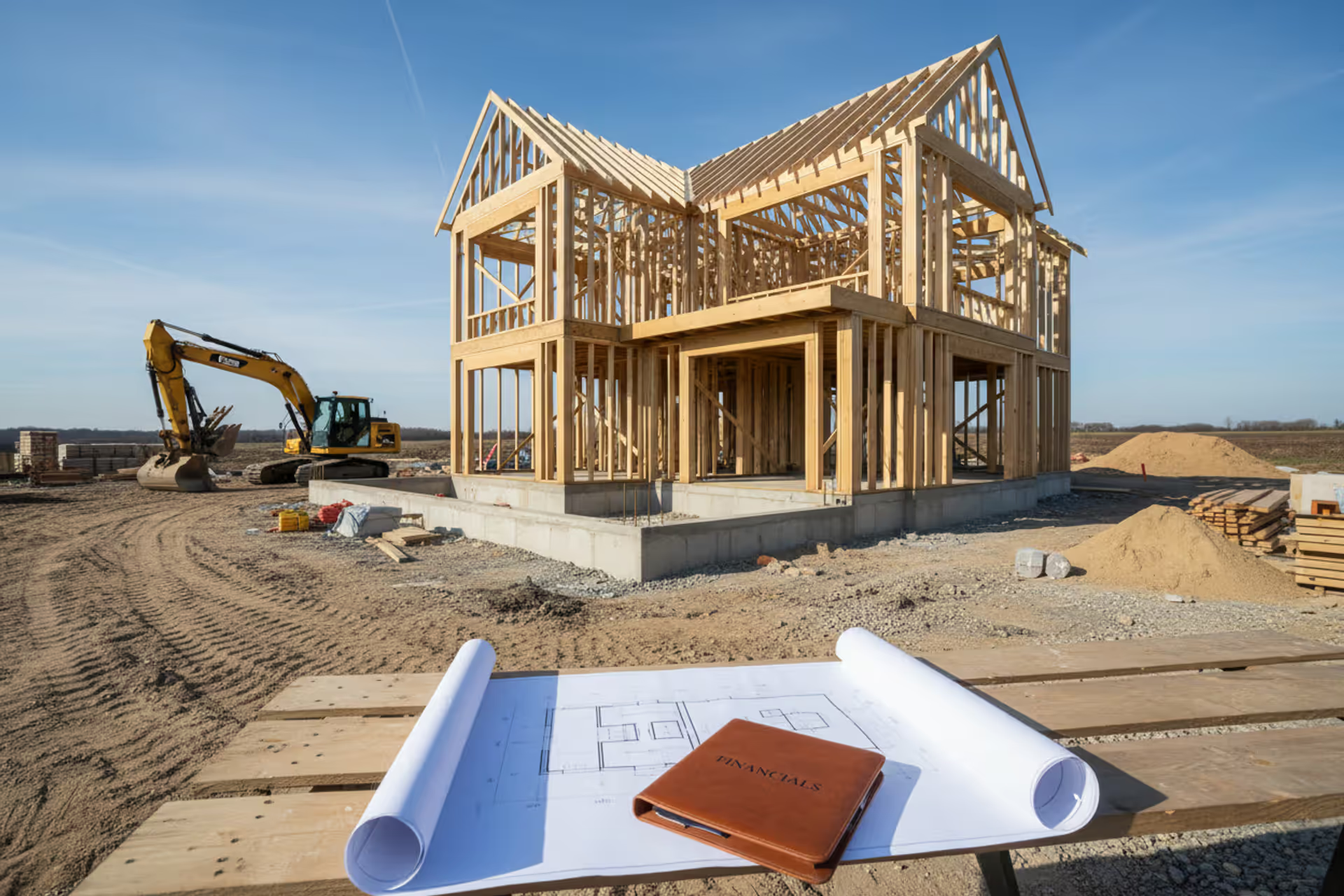
New home under construction with blueprints and financing documents
Construction Home Loan Rates Guide

Financing a new home build isn't like getting a regular mortgage. You're borrowing against blueprints and dirt, which makes lenders nervous—and that nervousness shows up in your interest rate. Construction home loan rates typically cost more than conventional mortgages, but the gap isn't as painful as you might think when you factor in how the payments actually work.
Let's break down what you'll really pay and why.
How Construction Loan Rates Work
Here's what catches most first-time builders off guard: you won't pay interest on the full loan amount right away.
Let's say you've got a $400,000 construction loan approved. Your builder pulls $150,000 in month three to cover the foundation and framing. You're only paying interest on that $150,000—not the full $400,000 sitting in the loan account. Next month, the builder draws another $80,000 for the roof and windows. Now you're paying interest on $230,000. Your monthly interest bill climbs as more money gets released, but you're never paying the maximum until the very end (if at all, depending on your final costs).
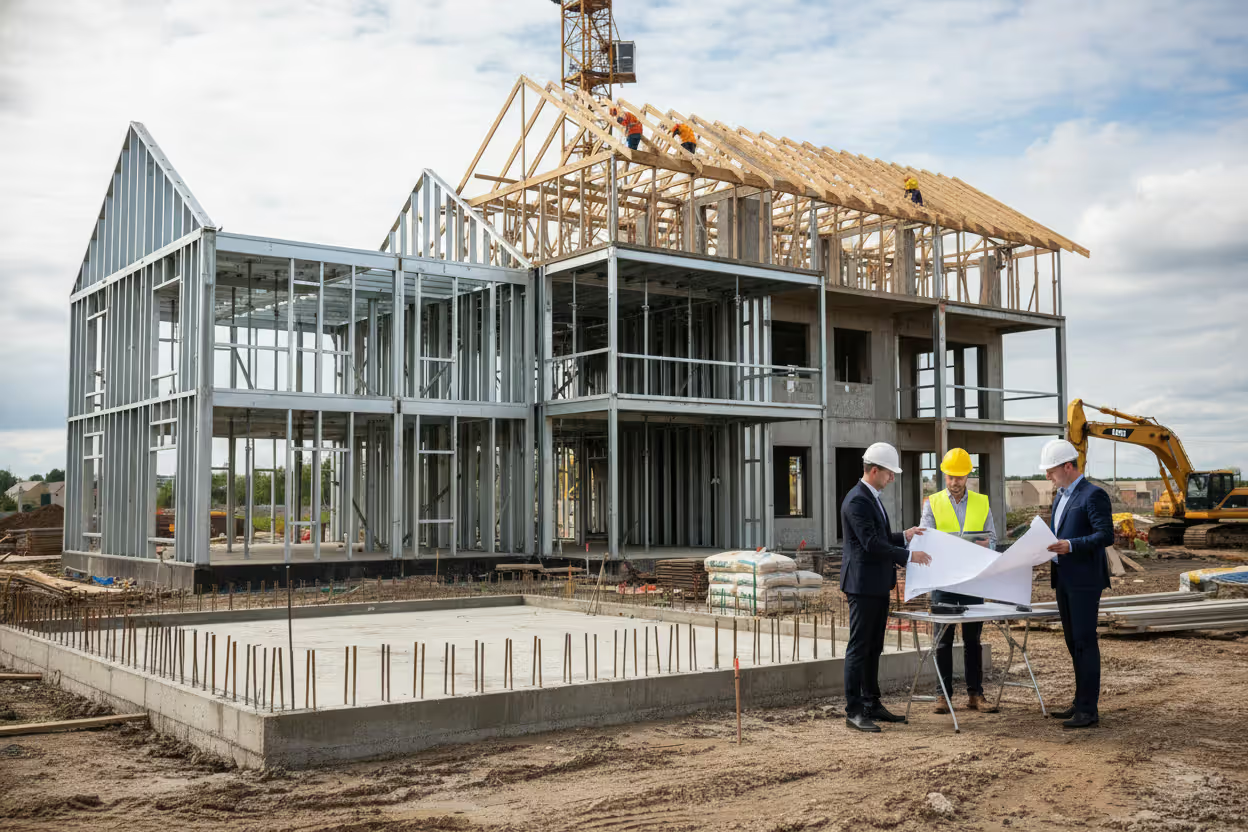
This payment structure lasts through what lenders call the "draw period"—usually six to 18 months. Banks don't just hand your builder a blank check. They release money in chunks tied to specific milestones: foundation complete, framing done, mechanical rough-in finished, drywall up, final walkthrough passed. An inspector (paid by you, unfortunately) verifies each phase before the bank cuts the next check. It's annoying but protects everyone from paying for work that hasn't happened yet.
Author: Ethan Callahan;
Source: isomfence.com
Most construction loans use variable rates pegged to prime plus a markup. If prime is 7.5% and your lender adds 1.5%, you're at 9% today—but that could shift next month if the Federal Reserve moves rates. Some lenders offer fixed-rate construction loans, though you'll pay an extra quarter to three-quarters of a point for that stability.
Once construction wraps, you hit a fork in the road. With a construction-to-permanent loan (sometimes called a "one-time close"), your loan automatically converts to a regular mortgage. You locked that permanent rate months ago when you first applied, which is either brilliant or painful depending on whether rates went up or down while you were building. With a standalone construction loan (a "two-time close"), you need to refinance into a permanent mortgage, meaning you'll pay whatever rates are available when your house is finished—plus go through underwriting again.
Why do construction rates run higher than regular mortgages? Put yourself in the lender's shoes. If you default halfway through the build, they're stuck with a half-finished house that nobody wants to buy. They can't just foreclose and recoup their money like they could with a completed home. They'd need to either finish the construction themselves (expensive and complicated) or sell the property at a massive loss to another builder. That risk gets priced into your rate. Plus, managing construction loans requires more staff time—inspections, draw coordination, builder communication—and those overhead costs filter into the interest you pay.
Average Construction Borrowing Rates in 2025
Right now, you're looking at construction loan rates between 6.75% and 9.25%, depending on the loan type and your financial profile. That's roughly three-quarters of a point to two full points above conventional 30-year mortgages, which are running 6.25% to 6.75% in early 2025.
| Loan Type | Rate Range You'll See | Cash Down You'll Need | Works Best For |
| Construction-to-Permanent | 7.00% - 8.50% | 20% - 25% | First-time builders who want to lock their long-term rate upfront and close once |
| Standalone Construction | 7.50% - 9.25% | 25% - 30% | Builders expecting rates to drop, or those planning to pay cash after completion |
| Renovation Loan (203k/HomeStyle) | 6.75% - 7.75% | 3.5% - 20% | Buyers purchasing existing homes that need significant updates |
| Owner-Builder Loan | 8.00% - 10.50% | 30% - 40% | Experienced contractors building their own homes |
These ranges assume you've got a credit score above 680 and you're borrowing less than 80% of the total project cost. Community banks and credit unions often beat national lenders by a quarter to half a point, especially if you've already got accounts with them.
The spread between construction and conventional rates has actually tightened over the past two years. Back in 2023, construction loans cost 2.5% to 3% more than regular mortgages. Better technology and more lender competition have compressed that gap, which is good news if you're building in 2025.
Pricing Factors That Affect Your Construction Loan Rate
Lenders evaluate two things when pricing your construction loan: whether they trust you to repay it, and whether they trust your project to finish on budget.
Borrower Financial Profile
Your credit score matters more here than it does for regular mortgages. A 780 score versus a 660 score might mean a 1.5% to 2% rate difference—that's huge. Most lenders want at least 620 to 680 to even consider your application, but you won't see their best pricing until you're above 740.
Your down payment percentage directly moves your rate. Going from 20% to 25% down typically shaves a quarter to three-eighths of a point off your rate. Putting down 30% might save another quarter point. More skin in the game means less risk that you'll walk away if costs spiral.
Debt-to-income ratio gets scrutinized harder in construction lending because you're often carrying dual housing costs temporarily—your current rent or mortgage plus the construction loan interest. Lenders want your total debts below 43% of your gross income, with the best rates reserved for borrowers under 36%.
Cash reserves matter more than most borrowers realize. Lenders typically want six to 12 months of your future housing payment sitting in the bank untouched. Strong reserves can offset a borderline credit score or compensate for a higher loan-to-cost ratio, potentially improving your rate by a quarter to half a point.
Project-Specific Risk Factors
Your builder's track record significantly impacts your rate. Using a licensed, insured contractor who's completed at least a dozen similar projects can cut your rate by half a point to three-quarters compared to using your buddy who "does great work on the side." Most lenders maintain approved builder lists—picking someone already on that list smooths underwriting and typically improves pricing.

Author: Ethan Callahan;
Source: isomfence.com
Loan-to-cost ratio (what you're borrowing divided by total project cost) affects your rate more than loan-to-value does with regular mortgages. Keep your LTC under 75% and you'll qualify for the best rates. Borrow 75% to 80% and expect to pay an extra quarter to half a point. Anything above 80%—which few lenders even allow—might cost you a full point or more.
Your construction timeline introduces rate uncertainty. A six-month build presents less risk than an 18-month custom estate. Longer timelines mean more opportunity for cost overruns, economic changes, or shifts in your financial situation. Some lenders add one-eighth to a quarter point for every six months beyond a standard 12-month assumption.
Where you're building affects pricing through local market conditions and lender familiarity. Building in an established subdivision with plenty of recent sales data earns better rates than building on a remote 40-acre parcel where comparable properties are scarce. Lenders also price regional economic health into their rates—markets with stable jobs and strong housing demand get better pricing than economically volatile areas.
Which type of lender you choose creates real rate variation. Big national banks offer competitive rates but inflexible underwriting. Regional banks and credit unions might charge slightly more but bend on unusual projects. Specialized construction lenders bring deep expertise but often charge premium rates for complex builds. Shopping across lender types frequently reveals half-point to full-point spreads for identical borrowers and projects.
Construction Rate Comparison Basics
Shopping construction lenders means understanding a few quirks that don't apply to regular mortgages.
The interest rate versus APR gap matters more with construction loans because fees represent a bigger chunk of what you're borrowing. A construction loan might carry $8,000 to $15,000 in origination charges, inspection fees, and draw administration costs. One lender advertising 7.50% with $12,000 in fees could cost more than a competitor at 7.75% with $6,000 in fees once you factor everything in. Always compare APRs, not just the advertised rate.
One-time close versus two-time close structures involve a fundamental trade-off. One-time close loans (construction-to-permanent) let you lock your eventual mortgage rate today, protecting against rate spikes while you build. You'll pay a quarter to half a point more during construction for that privilege, but you gain certainty about your final monthly payment. Two-time close loans require new financing after construction wraps, exposing you to whatever rates exist then. If rates fall while you're building, you win. If they rise, you're stuck paying more.
Fixed versus variable rates during construction create another choice. Variable rates start lower but move with prime. On a typical 12-month build, a one-point rate increase adds about $330 in interest per $100,000 borrowed—meaningful but not devastating given the short timeframe. Fixed construction rates eliminate that uncertainty at a cost. Most borrowers go variable during construction and fixed for the permanent phase.
Reading construction loan estimates requires attention beyond the base rate. Look for the draw fee (typically $150 to $300 per inspection visit), the conversion fee (if applicable), and the rate lock extension fee. Some lenders charge a quarter point to relock your permanent rate if construction drags past the original timeline. These fees add up quickly.
When requesting quotes, standardize your variables. A quote at 75% loan-to-cost isn't comparable to one at 80%. Specify whether you want one-time or two-time close, fixed or variable during construction, and your estimated build duration. Otherwise you're comparing apples to oranges.
Types of Construction Financing and Their Rates
Different construction loan products carry distinct rates based on their structure and the risk lenders perceive.
Construction-to-permanent loans merge your construction financing and permanent mortgage into one package with a single closing. You lock both rates upfront—usually variable during construction, fixed afterward. Locking that permanent rate today protects against rising rates during your build. These loans typically cost a quarter to half a point more during construction than standalone options, but you get rate certainty and avoid closing twice. Conventional versions require 20% to 25% down and credit scores above 680. FHA and VA flavors exist with lower down payments but slightly higher rates.
Standalone construction loans fund only the build phase, requiring separate permanent financing afterward. They offer the lowest starting rates—often a quarter to half a point below construction-to-permanent products—because they carry shorter terms and less interest rate risk for lenders. You'll close twice and pay two sets of closing costs, which is expensive and time-consuming. This structure works if you're betting on rates falling during construction or if you're planning to pay cash once the house is done.
Renovation loans like FHA 203k and Fannie Mae HomeStyle blend purchase financing with construction money for buyers renovating existing properties. These products price closer to conventional mortgages—usually a quarter to three-quarters of a point above standard purchase loans—because the property already exists and provides real collateral. The 203k program allows down payments as low as 3.5% with current rates ranging from 6.75% to 7.75%, making it the most accessible construction-related option.
Owner-builder loans serve experienced contractors managing their own construction projects. These carry the steepest rates—typically 8% to 10.5%—and require 30% to 40% down. Lenders price in the elevated risk of inexperienced project management and the absence of contractor performance guarantees. Many lenders won't touch owner-builder deals at any rate, limiting your choices significantly.
How to Qualify for Better Construction Mortgage Rates
You can't control the Federal Reserve, but you can control several factors that directly improve your rate.
Push your credit score past key thresholds. Jumping from 679 to 680 unlocks better rate tiers at most lenders. Moving from 739 to 740 triggers another improvement. Start by paying your credit card balances down to 30% of their limits or less. Pull your credit reports from all three bureaus and challenge any mistakes. Don't apply for new credit cards or car loans in the six months before your construction loan application. A 40-point score increase can trim half a point to three-quarters from your rate.

Author: Ethan Callahan;
Source: isomfence.com
Scrape together a larger down payment if you can swing it. Every 5% increment above the minimum often earns a rate cut. If you're planning 20% down and could stretch to 25%, run the numbers—the interest savings over a year of construction plus 30 years of mortgage payments might dwarf the opportunity cost of tying up more cash.
Pick a builder from your lender's approved list. Most construction lenders pre-qualify certain contractors based on licensing, insurance, track record, and financial stability. Using an approved builder can cut a quarter to half a point from your rate and speed up underwriting considerably. If you've already chosen a builder who's not approved, ask your lender if they'll review the builder's credentials before you formally apply.
Invest in detailed plans and specifications. Lenders hate uncertainty. Vague blueprints with lots of "allowances" and "to be determined" line items signal trouble. Complete architectural drawings, itemized cost estimates, and a fixed-price contract with your builder demonstrate control and reduce perceived risk. Spending $3,000 to $5,000 on thorough planning documents can save you multiples of that in interest over the life of the loan.
Time your rate lock strategically. Construction loan rate locks typically last 60 to 90 days, with extensions available for fees (usually a quarter point per 30-day extension). Apply so your lock covers your closing date without cutting it too close. If rates are climbing, lock early. If they're falling, wait until closer to closing. Some lenders offer float-down options that let you capture rate drops after locking, usually for a fee of a quarter to half a point.
Show more cash reserves than required. If the lender wants six months of payments in the bank, show them 12. If your project has other risk factors—borderline credit, higher loan-to-cost, unconventional design—extra reserves can offset those concerns in the underwriter's mind and potentially improve your pricing.
Consider portfolio lenders for unusual projects. If your build involves unconventional design, remote location, or other non-standard elements, community banks and credit unions that keep loans on their own books (rather than selling them) often provide better rates than big institutional lenders bound by strict secondary market guidelines.
Borrowers obsess over the construction phase rate and completely ignore the permanent rate and total fees.I've seen people choose a lender offering 7.25% during construction, then get stuck with 7.75% on the permanent mortgage plus $12,000 in fees. That costs way more over 30 years than a competitor at 7.50% construction, 7.00% permanent, and $6,000 in fees. You need to model the complete picture over however long you plan to own the house, not just obsess about year one
— Jennifer Martinez
Common Questions About Construction Home Loan Rates
Construction home loan rates cost more than conventional mortgages because lenders take on more risk financing a property that exists only on paper. But higher rates don't mean you're powerless—your credit profile, down payment, builder selection, and project planning all influence the rate you'll ultimately pay, and you control most of those variables.
The construction lending landscape in 2025 offers more choices than ever. Construction-to-permanent loans let you lock your long-term rate today, betting on rate stability or increases. Standalone construction loans leave you exposed to rate changes but start cheaper. Renovation loans bring the most accessible down payment requirements. The right choice depends on your risk tolerance, timeline, and rate expectations.
Shopping multiple lenders remains your single most effective rate negotiation tool. Half-point to full-point spreads between the highest and lowest offers for identical borrowers aren't unusual—that difference compounds over 30 years into tens of thousands of dollars.
Don't fixate on the rate in isolation. A slightly higher rate paired with lower fees, flexible draw schedules, and a lender who actually understands construction financing often delivers better value than the absolute lowest rate from a mortgage company that's never built a house. You're making a major financial commitment here—getting the financing structure right sets up your entire project for success.
Related Stories

Read more
Read more




The content on this website is provided for general informational and educational purposes only. It is intended to explain concepts related to home loans, mortgage rates, home equity loans, and the home buying process.
All information, including articles, guides, and explanations, is provided for general educational purposes only. Mortgage terms, interest rates, eligibility requirements, and lending conditions may vary depending on individual financial situations, lenders, and regional regulations.
This website does not provide financial, legal, or mortgage advice, and the information presented should not be considered a substitute for consultation with qualified financial professionals, lenders, or advisors.
The website and its authors are not responsible for any errors or omissions, or for any decisions made based on the information provided on this website.