
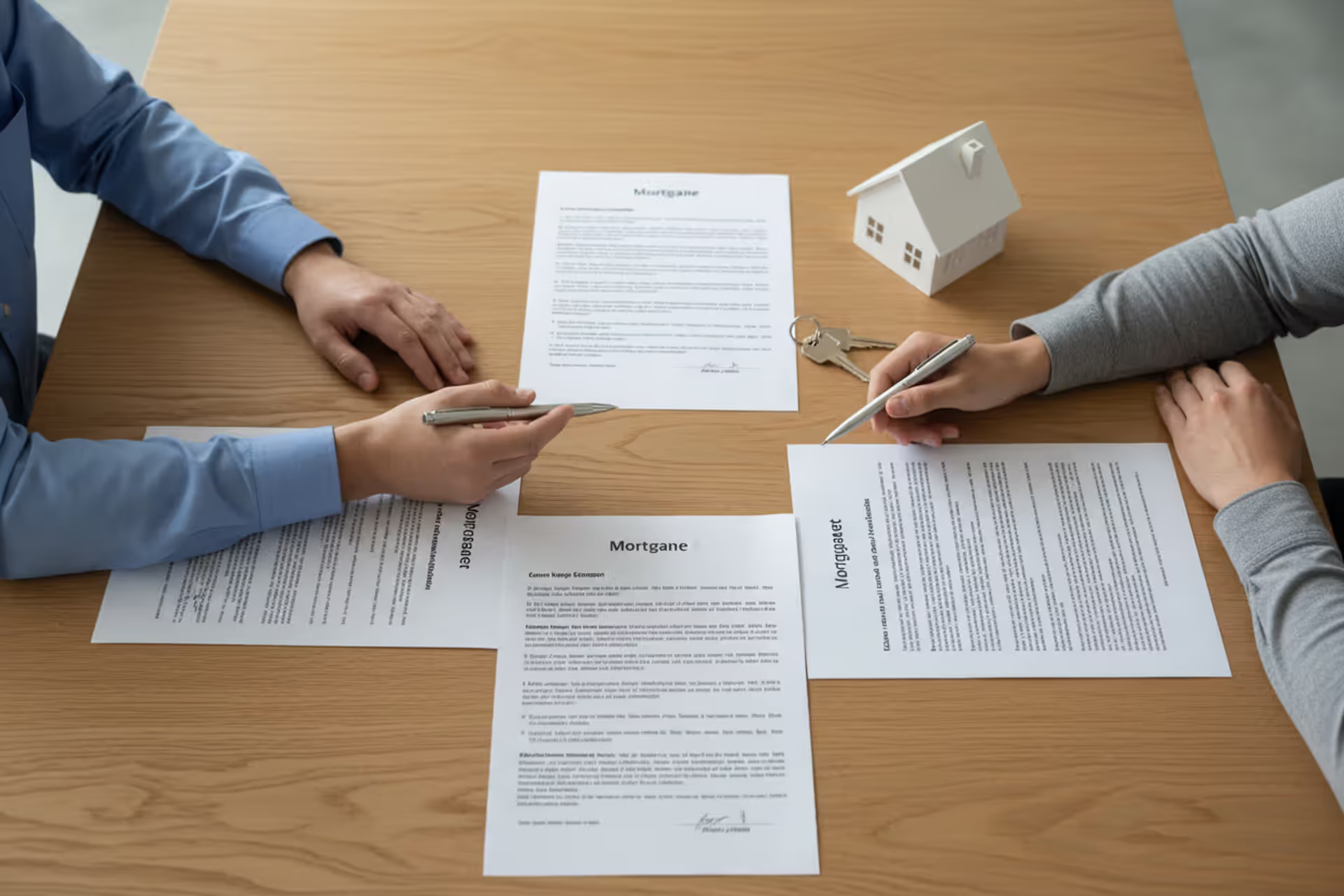
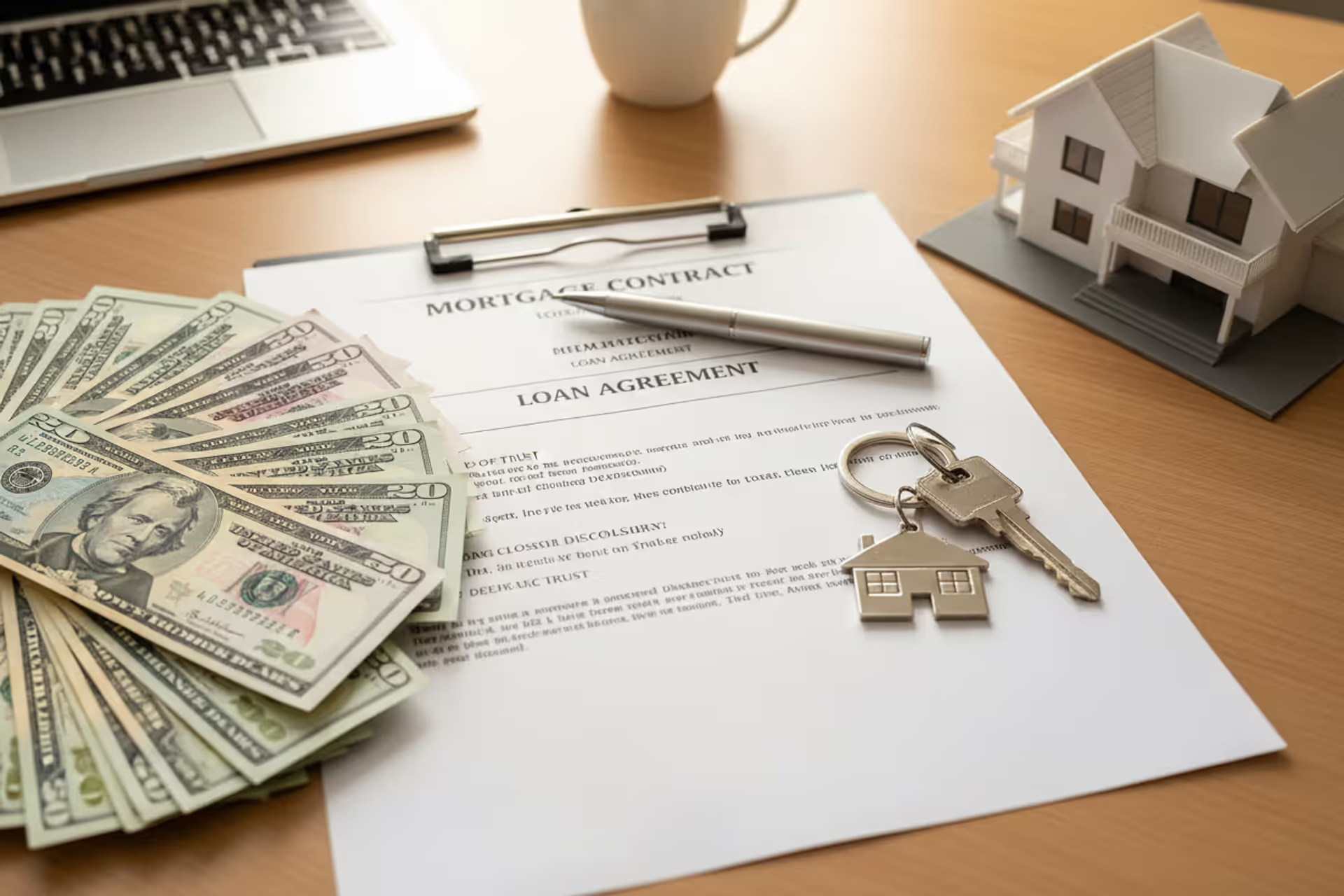
Top view of a closing table with mortgage documents, house keys, and a small house model, with two pairs of hands during a home purchase signing
What Are Mortgage Closing Costs and How Much Should You Expect to Pay

So you've saved up your down payment—congratulations! But here's the catch: you're not done writing checks yet. Most homebuyers get blindsided by closing costs, that substantial pile of fees and expenses due at settlement. I've seen buyers scramble to pull together an extra $15,000 just days before their closing because nobody warned them about these charges.
Here's what you're looking at: closing costs bundle together all the administrative, legal, and prepaid expenses that make your home purchase official. We're talking about 2% to 6% of whatever you're borrowing. Buying a house with a $400,000 loan? Tack on anywhere from $8,000 to $24,000 in additional cash you'll need. Getting a clear picture of these expenses early—before you fall in love with a house—protects you from scrambling later or worse, losing your dream home because you can't cover the fees.
Understanding Closing Costs on Your Mortgage
What are closing costs? Think of them as the price tag for all the services, paperwork, insurance, and government filings that turn a purchase contract into actual homeownership. You're paying for loan processing, property appraisals, title verification, recording the deed—the whole nine yards.
You'll settle these charges at your closing appointment, usually held at a title company office, real estate attorney's conference room, or escrow office. Payment comes due before anyone hands you the keys—and you'll need a wire transfer or cashier's check since nobody accepts personal checks for five-figure amounts.
Here's something buyers often misunderstand: both sides of the transaction pay closing expenses. The buyer doesn't shoulder everything alone. Convention says buyers handle loan-related charges while sellers cover real estate agent commissions and certain transfer taxes, but there's nothing carved in stone about this arrangement. When sellers are desperate to close, they'll sometimes pick up some or all of the buyer's fees as a sweetener.
Most mortgages come with closing costs between 2% and 6% of the loan amount, and there's an interesting quirk: the percentage drops a bit on bigger loans. A $200,000 mortgage might hit you with 5% in fees ($10,000), but a $600,000 loan might only reach 3% ($18,000). Your final bill depends on where you're buying, which lender you choose, your loan type, and what kind of property you're purchasing.
Most buyers focus exclusively on saving for their down payment and forget that closing costs require substantial cash reserves too,.I always advise clients to budget an additional 3% to 5% of the purchase price beyond their down payment to avoid scrambling for funds at the last minute
— Jennifer Martinez
Mortgage Fees Breakdown: What's Included in Closing Costs
Breaking down the mortgage fees helps you catch inflated charges and properly compare what different lenders are offering. These expenses sort into four buckets:
Lender Fees
Your mortgage company charges these for creating and processing your loan:
Loan origination fee compensates the lender for creating your mortgage and handling all the paperwork. You're looking at 0.5% to 1% of your loan. Borrowing $350,000? That's $1,750 to $3,500 right there.
Discount points let you buy down your interest rate if you want—completely optional. One point costs 1% of your loan amount and usually drops your rate by a quarter percentage point. Whether buying points makes financial sense depends entirely on your timeline. Planning to move in three years? Skip them. Staying for fifteen? They might pay off handsomely.
Application and processing fees cover the initial paperwork shuffle and document prep. Some lenders roll this into the origination fee, others charge separately—anywhere from $300 to $900.
Underwriting fee pays for someone to thoroughly examine your financial life and assess how risky you are as a borrower. Budget $400 to $700 for this scrutiny.
Third-Party Service Fees
These payments go to outside professionals providing essential services:
Appraisal fee covers an independent professional's assessment of what the property is actually worth. Lenders demand this to confirm they're not loaning you $500,000 on a $400,000 house. Standard single-family homes run $400 to $700, though unique or large properties cost more.
Home inspection technically falls outside official closing costs since you typically pay it weeks earlier, but you should absolutely budget for it anyway—$350 to $600 well spent. Skipping this to save money ranks among the dumbest financial moves you can make.
Title search and title insurance protect against ownership nightmares. The title search ($200–$400) digs through public records to confirm the seller actually owns the property free and clear. Lender's title insurance ($500–$1,500) protects the bank if ownership problems surface. Owner's title insurance protects you—optional but highly recommended.
Survey fee verifies property boundaries and identifies any easements. Not every transaction requires one, but when you need it, expect $300 to $600.
Attorney fees become mandatory in states requiring lawyers to supervise closings. Depending on location and complexity, you'll pay $500 to $2,000.
Credit report fee covers pulling your credit history—usually $25 to $50, a relative bargain in this lineup.
Government Fees and Taxes
These mandatory charges flow to local and state governments:
Recording fees pay the county to officially file your deed and mortgage in public records, making your ownership official. Usually $100 to $300, though this swings wildly by location.
Transfer taxes hit when property changes hands, charged by state, county, or municipal governments. Some states skip this entirely; others slam you with 1% or more of the purchase price. High-tax jurisdictions like New York City can tack thousands onto your bill just for this one item.
Property taxes often get collected at closing to fund your escrow account. You might prepay several months depending on the previous owner's payment schedule and when the next bill comes due.
Prepaid Costs and Escrow Items
These aren't actually fees—you're paying ahead for expenses you'd owe anyway:
Homeowners insurance premium for your first year typically comes due at closing—$800 to $2,500 depending on your location, coverage level, and home value.
Mortgage interest from your closing date through month-end must be paid upfront. Close on the 10th? You're prepaying 20 days of interest. This explains why closing near month-end saves you money on this particular line item.
Escrow account deposits establish the reserve fund for your future property tax and insurance bills. Lenders usually collect two to three months' worth of property taxes and insurance premiums to get this account started.
HOA fees might require payment in advance if you're purchasing in a community with a homeowners association.
Here's how the numbers typically shake out on a $400,000 mortgage:
| Fee Category | Specific Charge | Typical Cost Range |
| Lender Fees | Origination Fee (1%) | $4,000 |
| Lender Fees | Underwriting Fee | $400–$700 |
| Third-Party | Appraisal | $500–$700 |
| Third-Party | Title Search | $200–$400 |
| Third-Party | Lender's Title Insurance | $800–$1,200 |
| Third-Party | Owner's Title Insurance | $1,000–$1,500 |
| Third-Party | Attorney/Escrow Fee | $500–$1,500 |
| Government | Recording Fees | $100–$300 |
| Government | Transfer Taxes | $0–$4,000+ (location dependent) |
| Prepaid | Homeowners Insurance (1 year) | $1,200–$2,500 |
| Prepaid | Property Tax Reserves | $1,500–$3,000 |
| Prepaid | Prepaid Interest (15 days average) | $650–$850 |
| Total Estimated Range | $10,850–$16,650 |
How Much Are Loan Closing Fees in Different States
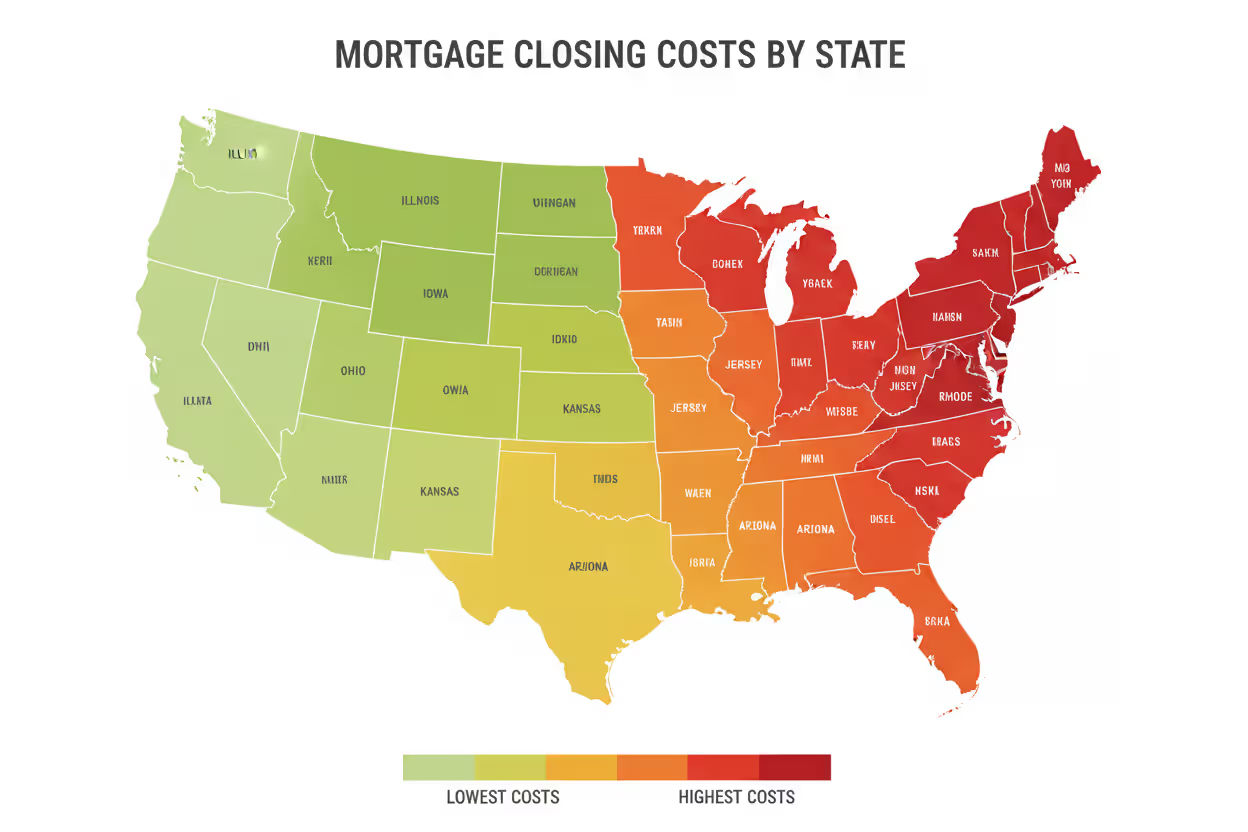
Where you buy dramatically impacts your final closing bill. Take a $300,000 mortgage: in Missouri you might pay $5,400, while that identical loan in New York could exceed $12,000.
What creates such massive regional swings?
Transfer taxes cause the biggest headaches. States like Indiana, Montana, and Texas charge absolutely nothing for transferring property. Pennsylvania hits you with 2%, and some New York areas combine state and local transfer taxes exceeding 2.5%. On a $500,000 home, you're talking about the difference between zero and $12,500—just for this single category.
Author: Ethan Callahan;
Source: isomfence.com
Attorney requirements inflate costs in the 24 states (mainly Northeast and South) that legally require lawyers to conduct or oversee closings. This extra legal protection adds $800 to $2,000 compared with states where title companies handle everything.
Title insurance rates vary based on state regulation. Florida and Texas set fixed rates by law, while California lets title companies compete on price, creating shopping opportunities that can save you hundreds.
Property taxes influence how much you'll prepay into escrow. New Jersey and Illinois residents face America's highest property tax rates, requiring bigger upfront escrow deposits than folks in Alabama or Louisiana.
ClosingCorp's 2025 data analysis shows average closing costs (excluding prepaids) for a $300,000 mortgage:
States where you'll pay least: - Missouri: $2,377 - Indiana: $2,408
- South Dakota: $2,430 - Iowa: $2,447 - Kentucky: $2,490
States where you'll pay most: - District of Columbia: $6,358 - Delaware: $5,864 - New York: $5,623 - Washington: $5,417 - Maryland: $4,908
Even within states, urban centers cost more. San Francisco closing costs outpace Sacramento's, and Miami exceeds Jacksonville, primarily because of higher property values and local transfer taxes.

Author: Ethan Callahan;
Source: isomfence.com
Ways to Reduce Your Mortgage Settlement Costs
Good news: mortgage settlement costs aren't set in stone. You've got leverage to negotiate and strategies to cut your bill:
Shop multiple lenders. Origination fees, processing charges, and discount points fluctuate wildly between lenders. Pull Loan Estimates from at least three—maybe five—and scrutinize them side by side. One lender might charge $1,500 for services another provides for $800.
Negotiate with your lender. Plenty of fees have wiggle room, particularly when you're bringing excellent credit and solid income to the table. Which fees are flexible? Ask directly. Application fees and processing fees frequently vanish for well-qualified borrowers who simply request waivers.
Compare title companies and services. In states allowing you to choose your title company, collect quotes from several providers. Title insurance premiums might be regulated, but ancillary services usually aren't. Smart shopping here can pocket you $500 to $1,000.
Ask the seller to contribute. Seller concessions—where the seller credits you money toward your closing expenses—happen all the time in buyer's markets. Depending on loan type and down payment size, you can negotiate up to 3% to 6% of the purchase price as a seller credit. This doesn't actually reduce the fees themselves; it just shifts responsibility for paying them.
Consider a no-closing-cost mortgage. Some lenders advertise loans with zero upfront closing costs—sounds great, right? The catch: you'll accept a slightly higher interest rate (usually 0.25% to 0.5% higher). This trade makes sense when you're cash-strapped at closing or anticipate refinancing within several years. Long-term, the higher rate costs more, so calculate your break-even point before committing.
Request lender credits. Similar to no-closing-cost mortgages but more flexible—you decide how much interest rate you'll sacrifice for upfront savings. Accept a higher rate, and lenders provide credits offsetting your closing costs.
Time your closing strategically. Closing on the last day of the month minimizes prepaid interest since you owe fewer days' worth. That said, this only saves a few hundred bucks and shouldn't override other important scheduling factors.
Review your Loan Estimate carefully. Lenders must provide this document within three business days of your application. It itemizes every single cost. Compare estimates from different lenders and challenge any fees seeming inflated or pointless. Some lenders bury junk fees serving absolutely no legitimate purpose.
Ask about fee waivers for special programs. VA loans prohibit certain fees for veterans. First-time homebuyer programs sometimes bundle closing cost assistance. Research whether you qualify for any programs reducing or eliminating specific costs.
Choose a less expensive loan product when appropriate. FHA loans require both upfront and annual mortgage insurance premiums adding to your costs. If you qualify for a conventional loan with less than 20% down, compare total costs carefully—sometimes conventional loans prove cheaper overall despite requiring private mortgage insurance.

Author: Ethan Callahan;
Source: isomfence.com
Common Mistakes Buyers Make with Closing Costs
Even informed buyers stumble into these traps:
Underestimating the total amount needed. Buyers save diligently for their down payment but completely forget closing costs require thousands more in cash. Putting 10% down on a $400,000 home? You need $40,000 for the down payment plus another $8,000 to $16,000 for closing costs—$48,000 to $56,000 total, minimum. Budget conservatively using the higher end of estimates.
Ignoring the Loan Estimate. The Loan Estimate isn't just bureaucratic paperwork—it's your primary shopping tool and protection against surprise charges. Review every single line item. Lay multiple Loan Estimates side by side. Question anything unclear or excessive. This document locks in most fees (with limited exceptions), so understanding it prevents nasty closing-day surprises.
Confusing cash-to-close with closing costs. Your Closing Disclosure shows "cash to close," which bundles your down payment, closing costs, prepaids, minus any earnest money deposit and seller credits. Some buyers see this figure and panic, assuming closing costs alone reach that astronomical number. Break down each component so you understand exactly what you're paying and why.
Waiting until the last minute to arrange funds. Lenders require paper trails documenting large deposits. Suddenly transfer $20,000 into your account, and you'll need to document its source with extensive paperwork. Plan ahead—move money into your closing account at least 60 days beforehand to sidestep documentation nightmares.
Waiving important protections to save money. Skipping owner's title insurance or a home inspection saves a few hundred dollars now but exposes you to potentially catastrophic costs later. Spend $500 on an inspection that uncovers a $15,000 foundation problem? That's money brilliantly spent, not wasted. Owner's title insurance protects your ownership rights permanently—absolutely worth the one-time premium.
Forgetting about reserves. Beyond closing costs, lenders frequently require you to maintain cash reserves (typically two to six months of mortgage payments) in your accounts after closing. Drain every account covering closing costs and down payment, and you might fail reserve requirements entirely.
Accepting the first offer without negotiation. Plenty of fees are negotiable or can be shopped around. Buyers accepting their first Loan Estimate without comparison shopping or pushback typically overpay by hundreds or thousands.
Overlooking the timing of rate locks. Lock your rate too early and closing delays? Your lock might expire, forcing you into a new rate or an expensive extension fee. Coordinate your rate lock period with your expected closing date, building in buffer time for potential delays.

Author: Ethan Callahan;
Source: isomfence.com
Frequently Asked Questions About Mortgage Closing Costs
Mortgage closing costs create a significant financial hurdle beyond your down payment—typically adding $8,000 to $24,000 in upfront expenses when buying a median-priced home. Understanding these fees lets you budget accurately, avoid unpleasant surprises, and negotiate better terms.
Start by collecting Loan Estimates from multiple lenders—three minimum, five is better—and compare their fees meticulously. Challenge any charges seeming excessive or unclear. Evaluate whether seller concessions, lender credits, or no-closing-cost mortgages fit your specific situation. Scrutinize your Closing Disclosure thoroughly three days before closing to catch any unexpected fees that materialized.
Remember that while closing costs increase your immediate expenses, some represent critical protections like title insurance and home inspections. Cutting corners on essential services to save a few hundred dollars can cost thousands later. Focus your negotiation energy on lender fees and shopping for competitive rates on services like title insurance where you have legitimate choices.
With proper planning and informed negotiation, you can minimize your closing costs while ensuring you receive all necessary protections for what's likely the biggest financial transaction of your life.
Related Stories
Read more

Read more


The content on this website is provided for general informational and educational purposes only. It is intended to explain concepts related to home loans, mortgage rates, home equity loans, and the home buying process.
All information, including articles, guides, and explanations, is provided for general educational purposes only. Mortgage terms, interest rates, eligibility requirements, and lending conditions may vary depending on individual financial situations, lenders, and regional regulations.
This website does not provide financial, legal, or mortgage advice, and the information presented should not be considered a substitute for consultation with qualified financial professionals, lenders, or advisors.
The website and its authors are not responsible for any errors or omissions, or for any decisions made based on the information provided on this website.