
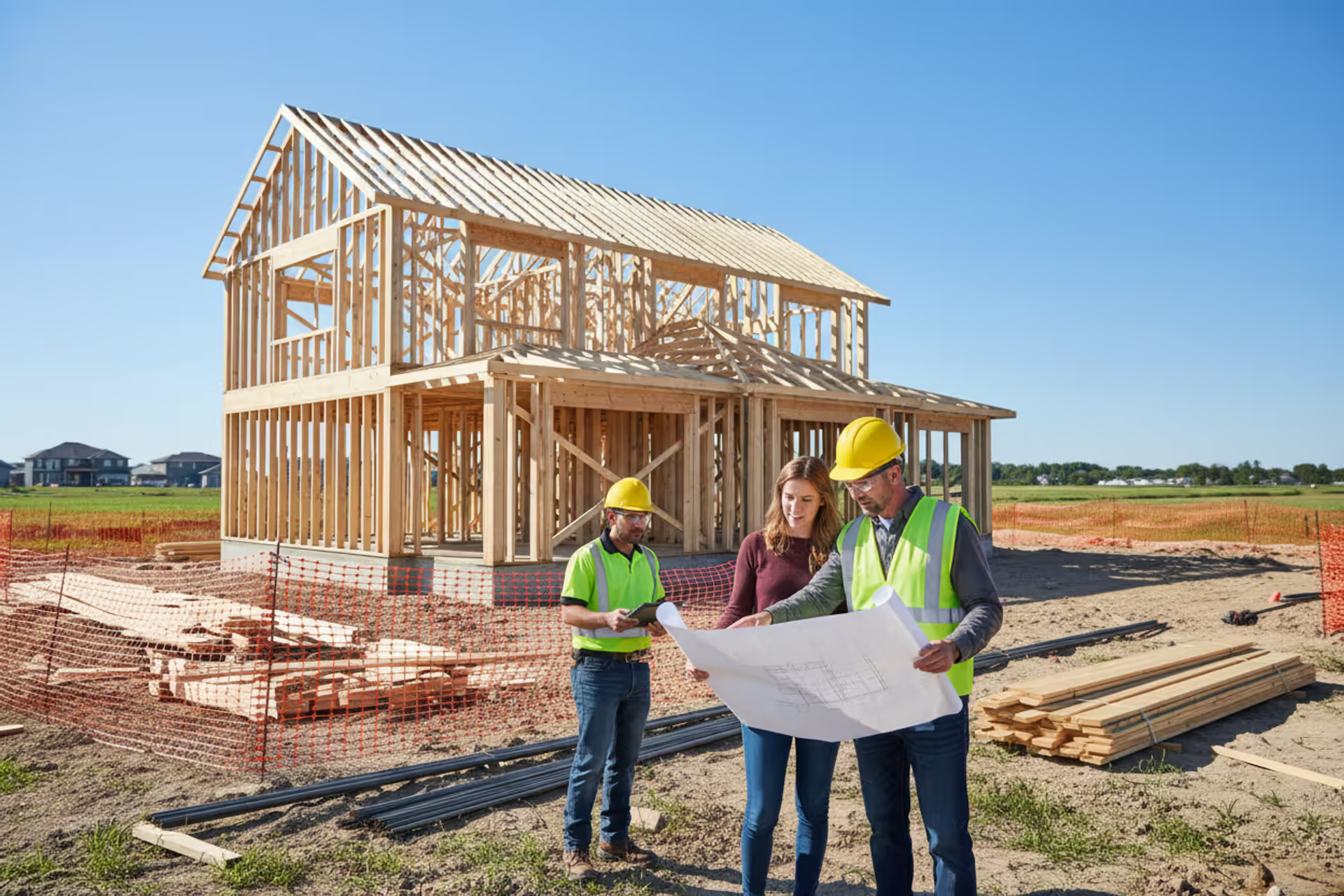
Couple reviewing plans with builder at a custom home construction site
New Construction Home Loan Guide

Building a custom home from the ground up represents a significant financial undertaking that requires specialized financing most buyers have never encountered. Unlike purchasing an existing property where you secure a traditional mortgage and close within weeks, financing new construction involves a multi-stage process with unique risks, requirements, and payment structures that can catch first-time builders off guard.
Understanding how construction financing works before you break ground can save you thousands in unnecessary fees and prevent costly delays that derail your project timeline.
What Is a New Construction Home Loan?
A new construction home loan is specialized financing designed to cover the costs of building a home from scratch. Unlike traditional mortgages that provide a lump sum at closing to purchase an existing property, construction loans disburse funds incrementally as your home progresses through various building stages.
The fundamental difference lies in the two-phase structure. During the construction period—typically six to twelve months—you make interest-only payments on the funds already disbursed. The lender doesn't hand over the full loan amount upfront because the collateral (your home) doesn't exist yet. Instead, they release money in stages as construction milestones are completed and verified through inspections.
Once construction finishes and you receive a certificate of occupancy, the loan converts to permanent financing. This is when your new build mortgage explained becomes a standard mortgage with principal and interest payments spread over 15 or 30 years.
Who needs this type of financing? Anyone building a custom home on land they own or plan to purchase, buyers working with builders who don't offer in-house financing, and homeowners undertaking substantial renovations that essentially create a new structure. If you're purchasing a newly built home that's already completed by a developer, you'll typically use a traditional mortgage instead.
The complexity and risk profile of construction loans means lenders scrutinize applications more carefully than conventional mortgage requests. Your builder's qualifications matter as much as your own financial standing, since an inexperienced or undercapitalized contractor can abandon a project halfway through, leaving the lender with an unfinished property worth less than the amount already disbursed.
Author: Brandon Kingswell;
Source: isomfence.com
How a New Construction Loan Works
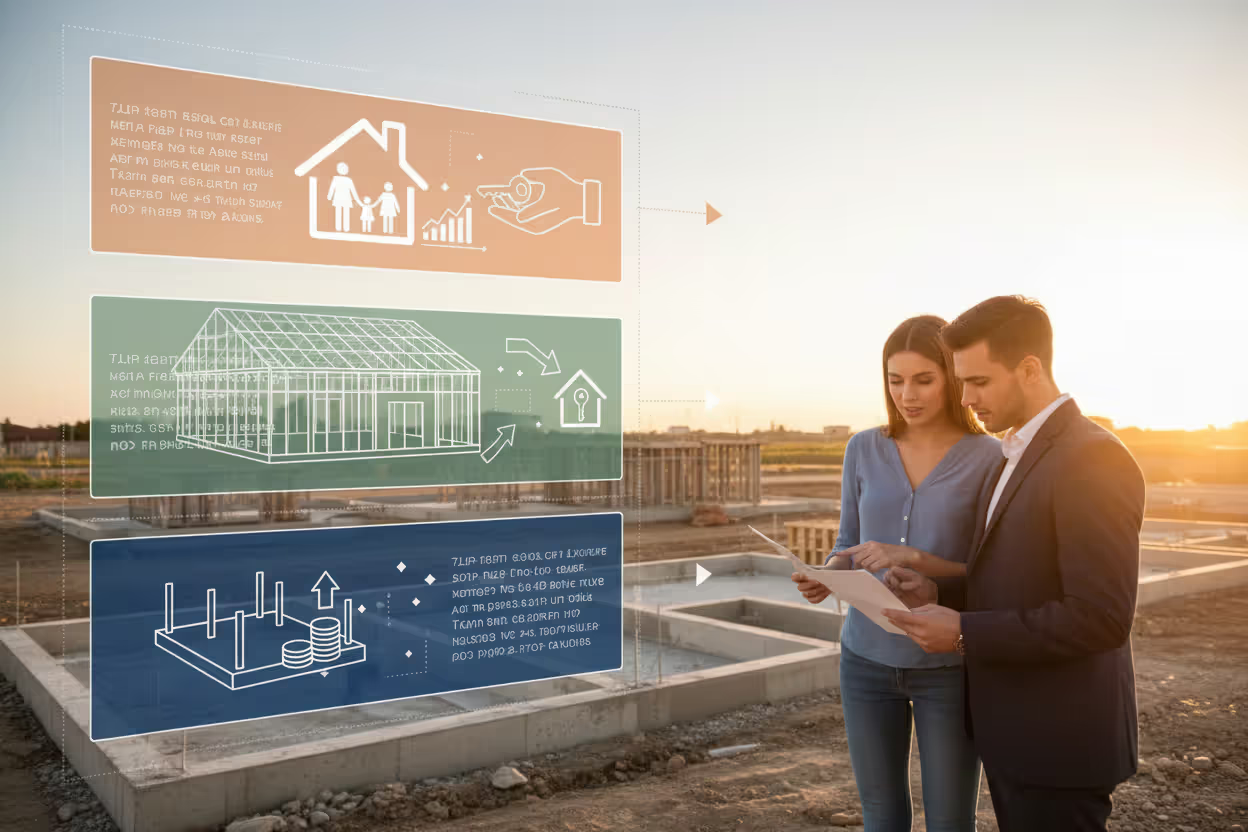
The construction loan process begins months before the first foundation is poured. After you apply and receive approval, the lender establishes a maximum loan amount based on the appraised value of the completed home—not the land or current state of construction. This "subject-to" appraisal estimates what your finished home will be worth, giving the lender confidence they can recoup their investment if something goes wrong.
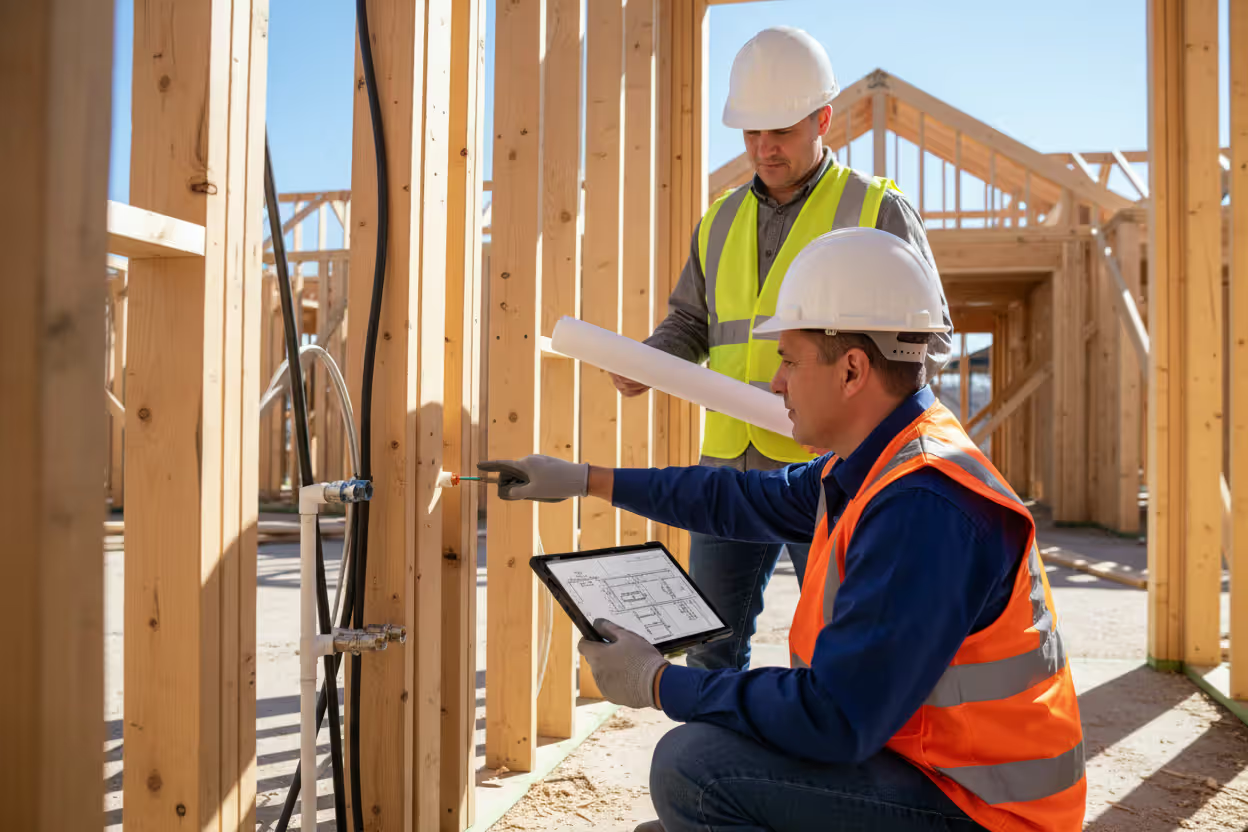
Before any money changes hands, you'll work with your lender to establish a detailed budget and timeline. Your builder submits a construction schedule breaking the project into specific phases: site preparation, foundation, framing, mechanical systems, interior finishing, and final completion. Each phase has an associated cost and estimated completion date.
Author: Brandon Kingswell;
Source: isomfence.com
The Draw Schedule Explained
The draw schedule is the backbone of construction financing. Rather than receiving all funds at once, your builder requests money as work progresses. Most lenders use a five- to seven-draw system, though some allow more frequent requests for larger projects.
A typical draw schedule might look like this: 10% after site work and foundation completion, 15% after framing and roof installation, 20% once mechanical systems are roughed in, 25% after drywall and interior systems are complete, 20% after finishes and fixtures are installed, and the final 10% upon final inspection and certificate of occupancy.
Before releasing each draw, the lender sends an inspector to verify the work has been completed according to plans and local building codes. If the inspector finds deficiencies or determines the work doesn't justify the requested amount, the lender may withhold funds until issues are corrected. This protects both you and the lender from paying for incomplete or substandard work.
During construction, you make monthly interest-only payments based solely on the amount disbursed so far. If your lender has released $150,000 of a $400,000 loan at a 7.5% rate, your monthly payment would be approximately $938—far less than the eventual permanent mortgage payment. These payments increase as more draws are released and the outstanding balance grows.
From Construction Loan to Permanent Mortgage
Once your home passes final inspection and you receive a certificate of occupancy, the conversion process begins. With a construction-to-permanent loan (also called a "one-close" loan), this happens automatically. The lender orders a final appraisal to confirm the completed home meets or exceeds the original estimated value, then converts your construction loan to a standard mortgage without additional closing costs or a new application.
The interest rate on your permanent mortgage was typically locked when you closed on the construction loan, protecting you from rate increases during the building period. Your new monthly payment now includes both principal and interest, calculated over the full loan term you selected.
If you chose a stand-alone construction loan (a "two-close" loan), you'll need to apply for a separate mortgage to pay off the construction loan. This means going through underwriting again, paying another set of closing costs, and potentially facing different interest rates than when you started. Market conditions six months or a year later could work in your favor or significantly increase your costs.
Types of New Build Home Loans
Understanding the different construction financing options helps you choose the structure that best fits your situation and risk tolerance. Each type serves different builder profiles and project scopes.
Construction-to-permanent loans combine construction financing and your permanent mortgage into a single transaction with one closing and one set of fees. You lock your interest rate at the beginning, protecting against rate increases during construction. This new build home loan guide approach offers convenience and cost savings but typically requires stronger credit and larger down payments than other options. Most conventional lenders prefer this structure because it reduces their administrative burden and keeps you as a customer long-term.
Stand-alone construction loans provide financing only for the building phase. After construction completes, you must secure separate permanent financing through a new mortgage application. While this creates additional work and expense, it offers flexibility if you expect your financial situation to improve during construction or if you want to shop for better mortgage rates once the home is finished. Some buyers use this option when they plan to sell their current home mid-construction and will have significant cash to put down on the permanent mortgage.
Renovation construction loans fund major remodeling projects that substantially change a home's structure or layout. The FHA 203(k) and Fannie Mae HomeStyle Renovation loans fall into this category. These allow you to purchase a fixer-upper and finance renovations in a single loan, or refinance your current home to fund major improvements. Building a home loan overview for renovations requires detailed contractor bids and plans just like new construction, but the existing structure provides collateral from day one.
Owner-builder construction loans serve experienced individuals who want to act as their own general contractor. Lenders view these as higher risk since most homeowners lack construction management experience. Expect stricter requirements: larger down payments (often 25-30%), extensive documentation of your construction experience, detailed project plans, and proof that qualified subcontractors are lined up for specialized work. Many lenders simply won't offer owner-builder loans regardless of your qualifications.
The right choice depends on your credit profile, how much cash you have available, your timeline, and whether you want rate protection during construction. Borrowers with excellent credit and stable income typically benefit most from construction-to-permanent loans, while those with unique situations or improving financial profiles might prefer the flexibility of stand-alone options despite higher overall costs.
Qualification Requirements and Down Payment
Lenders view construction loans as higher risk than traditional mortgages, which translates to stricter qualification standards. Most require a credit score of at least 680, though many prefer 700 or higher for the best rates. Borrowers with scores below 680 may still qualify but should expect significantly higher interest rates and larger down payment requirements.
Your debt-to-income ratio (DTI) becomes especially important with construction financing. Most lenders cap DTI at 43%, though some allow up to 45% for exceptionally qualified borrowers. This ratio includes your future mortgage payment based on the permanent loan amount, not just the interest-only construction phase payments. If you currently own a home you plan to sell after your new home is built, lenders may count both mortgage payments in your DTI unless you can prove the existing home will sell before your construction loan closes.
Cash reserves matter more with construction loans than traditional mortgages. Lenders typically require three to six months of mortgage payments in reserve after your down payment and closing costs. This cushion protects against construction delays, cost overruns, or temporary income disruptions that could jeopardize the project.
Down payment requirements generally start at 20% for construction-to-permanent loans, though some lenders accept as little as 10% for borrowers with excellent credit and strong income. Stand-alone construction loans often require 25% down due to the additional risk of refinancing uncertainty. If you're purchasing land and building simultaneously, the land value can count toward your down payment, but lenders typically require you to own the land free and clear or have substantial equity.
Documentation requirements extend beyond standard mortgage paperwork. You'll need complete building plans and specifications approved by local authorities, a detailed cost breakdown from your builder, the builder's license and insurance certificates, proof of the builder's financial stability, and sometimes references from the builder's recent clients. Lenders want assurance your builder can complete the project without running out of money or disappearing mid-construction.
The builder's qualifications can make or break your loan approval. Most lenders require builders to have at least three to five years of experience and a track record of completed projects similar in scope to yours. They'll verify the builder's license is current, confirm adequate liability and workers' compensation insurance, and may review the builder's financial statements to ensure they can cover costs between draw disbursements.

Author: Brandon Kingswell;
Source: isomfence.com
Costs and Fees to Expect
Construction loan costs exceed those of traditional mortgages due to the additional risk and administrative work involved. Understanding these expenses helps you budget accurately and avoid surprises that could derail your project.
Origination fees typically range from 1% to 2% of the loan amount, higher than the 0.5% to 1% common with conventional mortgages. On a $350,000 construction loan, expect to pay $3,500 to $7,000 just in origination fees. Some lenders charge this upfront, while others roll it into the loan balance.
Appraisal costs for construction loans run $500 to $1,500 depending on your location and project complexity. Unlike traditional appraisals that assess an existing property, construction appraisals estimate the future value of your completed home based on plans, specifications, and comparable sales. You'll need another appraisal when construction finishes to confirm the actual value, adding another $400 to $800 to your costs.
Inspection fees add up quickly since lenders require professional verification before releasing each draw. Budget $300 to $600 per inspection, multiplied by the number of draws in your schedule. On a six-draw loan, inspection fees alone could total $1,800 to $3,600.
Interest rates on construction loans typically run 0.5% to 1.5% higher than conventional mortgage rates. If 30-year fixed mortgages are available at 6.5%, expect construction loan rates around 7% to 8%. During the construction phase, you only pay interest on disbursed funds, but once converted to a permanent mortgage, you'll pay principal and interest on the full amount.
| Feature | Construction Loan | Traditional Mortgage |
| Loan Structure | Two-phase: construction + permanent | Single-phase, lump sum at closing |
| Interest Payments | Interest-only during construction on disbursed amounts | Principal + interest from day one |
| Draw Schedule | Funds released in stages as work completes | Full amount provided at closing |
| Appraisal Process | Two appraisals: estimated value + final completed value | One appraisal of existing property |
| Closing Timeline | 45-60 days typical | 30-45 days typical |
| Typical Rates | 7.0%-8.5% (2026) | 6.0%-7.0% (2026) |
| Down Payment | 20%-30% | 3%-20% depending on loan type |
Closing costs for construction-to-permanent loans mirror traditional mortgages since you only close once: expect 2% to 5% of the loan amount. Stand-alone construction loans require closing costs for both the construction loan and the permanent mortgage, potentially doubling these expenses.
Don't overlook soft costs that aren't part of the loan itself but are necessary for the project: permit fees, utility connection charges, survey costs, soil testing, and engineering reports can add $5,000 to $15,000 to your total project budget. Many first-time builders forget these items and find themselves scrambling for additional cash mid-construction.
Common Mistakes When Financing New Construction
Even experienced homebuyers make costly errors when navigating construction financing for the first time. Learning from others' mistakes can save you significant money and stress.
Underestimating total costs ranks as the most common and expensive mistake. First-time builders often create budgets based on basic construction costs without accounting for site preparation challenges, utility extensions, upgraded finishes they'll inevitably want, or the soft costs mentioned earlier. A useful rule of thumb: add 15% to 20% to your builder's estimate for contingencies and items you haven't anticipated. If your builder quotes $300,000, budget at least $345,000 to avoid running out of money before completion.
Choosing unqualified or underinsured builders to save money upfront often costs far more in the long run. A builder who offers a quote 20% below competitors may lack experience, cut corners on materials, or have financial problems that will halt your project mid-stream. Verify licenses, check references from recent clients, and confirm insurance coverage meets your lender's requirements. The cheapest bid is rarely the best value.
Not accounting for construction delays creates financial pressure when interest-only payments continue longer than expected. Weather, material shortages, permitting delays, and subcontractor scheduling conflicts can easily extend a six-month project to nine months or longer. If you're carrying both a construction loan and an existing mortgage or rental payment, those extra months of double payments can strain your budget. Build timeline padding into your financial planning and maintain larger cash reserves than you think necessary.
Skipping contingency funds leaves you vulnerable to cost overruns with no way to cover them. Rock where you expected soil, outdated building codes requiring expensive upgrades, or price increases for materials during construction can quickly consume your budget. Lenders won't increase your loan amount mid-construction without a new appraisal and underwriting process. Having 10% to 15% of your construction budget available in savings provides a critical safety net.
Misunderstanding the timeline causes problems for buyers who expect to move in by a specific date. Construction loans typically allow 12 months for completion, but you can't schedule your move-in date until you're much closer to finishing. Selling your current home before your new home is substantially complete forces you into temporary housing, adding unexpected costs and stress. Keep flexible housing arrangements until your new home passes final inspection.
The biggest mistake I see is borrowers who don't maintain adequate cash reserves for the unexpected. Construction projects almost never go exactly as planned, and having accessible funds to address surprises keeps your project moving forward instead of stalling while you scramble for money
— Jennifer Martinez
Frequently Asked Questions
Financing new construction requires more planning, documentation, and financial cushion than traditional home purchases, but the reward is a custom home built to your exact specifications. The key to success lies in understanding the two-phase nature of construction financing, choosing qualified builders who can complete your project on time and on budget, and maintaining adequate cash reserves for the inevitable surprises that arise during construction.
Start by getting pre-approved with lenders who specialize in construction loans rather than assuming your regular mortgage lender offers competitive terms. Compare not just interest rates but also draw schedules, inspection requirements, and conversion processes. The lowest rate means little if the lender's inflexible draw schedule creates cash flow problems for your builder.
Budget conservatively, adding 15% to 20% above your builder's estimate for contingencies and soft costs. Maintain cash reserves beyond what your lender requires—three to six months of mortgage payments represents the minimum, but more is better. These reserves protect you from construction delays, material cost increases, and the unexpected issues that emerge when you're literally building from the ground up.
Finally, recognize that construction financing involves more risk and complexity than traditional mortgages, but lenders have developed these specialized products precisely because building custom homes remains a viable path to homeownership for those willing to navigate the process. With proper planning, qualified professionals, and realistic budgets, construction loans successfully fund thousands of custom homes every year.
Related Stories

Read more

Read more



The content on this website is provided for general informational and educational purposes only. It is intended to explain concepts related to home loans, mortgage rates, home equity loans, and the home buying process.
All information, including articles, guides, and explanations, is provided for general educational purposes only. Mortgage terms, interest rates, eligibility requirements, and lending conditions may vary depending on individual financial situations, lenders, and regional regulations.
This website does not provide financial, legal, or mortgage advice, and the information presented should not be considered a substitute for consultation with qualified financial professionals, lenders, or advisors.
The website and its authors are not responsible for any errors or omissions, or for any decisions made based on the information provided on this website.